
Commercial Roofing Contractor in Stillwater MN
Historic and Modern Commercial Properties Require Different Approaches
Commercial property ownership in Stillwater involves a level of building-age diversity that few Washington County markets match. The historic downtown district contains commercial structures from the late nineteenth and early twentieth centuries — brick-construction retail and office buildings with flat or low-slope rooflines that have been re-roofed multiple times over their operational lives. Those older downtown buildings present a roofing environment that differs substantially from the commercial corridors on Stillwater's outskirts. Modified bitumen and built-up roofing systems on historic commercial structures often sit over substrate assemblies that include multiple earlier roof layers, structural deck conditions that vary by building section, and drainage arrangements that were designed around a different building use profile than the property serves today. Commercial properties developed outside the historic core — along the highway corridors and in the newer commercial zones — generally reflect post-1990s construction standards. Those buildings have different roofing profiles: single-ply systems on better-documented substrates, with roofing histories that are easier to trace because the buildings have fewer prior ownership and renovation layers to account for. For commercial property owners managing assets in both zones, the practical challenge is that decision-making about repair versus replacement looks different depending on which part of the Stillwater commercial market the property occupies. Age, prior roofing history, and current system condition drive different timelines and different system specifications — and those differences are visible in how the project is scoped and what a proper assessment needs to cover.
Seasonal Stress Patterns on Buildings With Complex Roofing Histories
Washington County's climate applies the same seasonal stress pattern to Stillwater's commercial buildings as it does across the rest of the county, but older buildings in the historic district often show that stress in locations that are harder to address than on newer commercial construction. Parapet walls, interior drains, and penetration details on buildings that have been re-roofed several times can have layered flashing conditions that require careful diagnosis before new work is specified. The commercial property owners who manage older Stillwater buildings typically find themselves in one of two situations: buildings that have been actively maintained with regular inspection and documented repair work, or buildings that have accumulated deferred maintenance over multiple ownership transfers. The difference between those two situations is not always apparent from the exterior. It becomes visible during inspection or, in the more difficult case, during tear-off when multiple layers of historical work reveal what prior decisions actually looked like. Newer commercial properties in Stillwater's developing corridors operate in a more straightforward decision environment — membrane condition, seam performance, and drainage function are more predictable on buildings with shorter operational histories. But those properties are approaching the age windows where the first significant roof system decisions need to be made, and making them with a clear inspection record rather than reacting to a visible failure separates managed capital expenditure from unplanned cost. Commercial roofing decisions across Stillwater's mixed-age building stock ultimately come down to documentation, diagnosis, and timing — the same three variables that determine outcomes in every other Washington County commercial roofing market.
Commercial Roof Replacement in Stillwater's Mixed Building Inventory
Commercial roof replacement in Stillwater requires a more nuanced scoping process than in markets with more homogeneous building stock. The historic downtown buildings and the newer commercial properties on the outskirts of Stillwater present fundamentally different project conditions, and treating them with the same replacement specification produces mismatched outcomes for property owners. For historic commercial buildings in downtown Stillwater, replacement typically involves substrate conditions that have accumulated complexity over multiple roof cycles. Parapet walls with integrated drainage, interior drain systems on older buildings, and structural deck conditions affected by decades of freeze-thaw cycling are factors that a replacement specification needs to account for before materials are selected or installation is priced. Newer commercial buildings in Stillwater's developing commercial zones have more straightforward replacement profiles. Original TPO systems on buildings from the early 2000s through the 2010s are entering or approaching their replacement window. Substrate conditions are generally well-documented, prior installation history is limited, and system selection follows the standard commercial flat roof evaluation criteria for Minnesota climate performance. Washington County's permit process applies across Stillwater's commercial inventory, but the permit scope for properties in historically sensitive zones sometimes involves additional review. Property owners managing downtown commercial buildings through a replacement cycle benefit from working with contractors who understand the permit requirements for both standard commercial construction and the historically sensitive properties that define Stillwater's downtown commercial character.
Flat Roof Systems for Historic and Modern Commercial Properties
Flat roof system selection for Stillwater's commercial properties reflects the building-age diversity that defines the market. For newer commercial properties in the developing corridors outside the historic core, TPO remains the standard specification — its seam performance in Minnesota's climate, compatibility with modern commercial construction profiles, and 20- to 30-year service life make it the appropriate starting point for most re-roof assessments. For older commercial buildings in downtown Stillwater, system selection involves additional considerations. Modified bitumen is sometimes retained on historic structures because it works well with the drainage configurations and substrate profiles that exist in buildings from that era. TPO is also viable on older buildings when the substrate is properly prepared, but preparation on a building with a complex roofing history requires more diagnostic work than on a newer structure with a single prior membrane layer. EPDM is relevant for smaller commercial buildings and structures with simpler rooftop geometries — properties without heavy rooftop equipment loads and with fewer penetrations where flashing complexity drives installation difficulty. For some of Stillwater's boutique commercial and mixed-use downtown buildings, EPDM's cold-weather flexibility and installation adaptability for irregular geometries make it a competitive system choice. System selection decisions for Stillwater commercial properties should account for building age, existing substrate condition, drainage configuration, and the specific performance requirements of the building type — not a single preferred specification applied across an inventory that varies as widely as this market's commercial stock does.
Commercial Roof Inspection for Established Building Stock
Commercial roof inspection on Stillwater's established building stock serves as both maintenance management and capital planning support. For the historic downtown properties, inspection is the mechanism that distinguishes between a membrane that has usable life remaining with targeted repair intervention and one that has reached the point where continued repair investment is less economical than replacement planning. Older commercial buildings in Stillwater benefit from inspection approaches that go beyond membrane surface condition. Parapet wall cap flashing, interior drain bowls and leaders, and the transition zones where the membrane meets wall penetrations and equipment curbs are the areas where freeze-thaw cycling produces the most consistent failure patterns on older buildings. A surface inspection that does not evaluate those details misses the failure locations that generate the most significant water intrusion events on historic commercial properties. For newer commercial properties on Stillwater's developing corridors, biannual inspection is a performance verification and documentation tool. Buildings in the 10- to 20-year range benefit most from inspection programs that generate a written condition record — a documented maintenance history that demonstrates the system has been actively managed through its mid-life period. Washington County commercial property transactions increasingly involve roof condition documentation as part of due diligence. Inspection records that cover membrane condition, repair history, and system age give commercial buyers and sellers a verifiable baseline for negotiation and capital planning — a practical outcome of consistent inspection programs regardless of where in Stillwater's commercial market the building sits.
Comprehensive Commercial Roofing Services in Woodbury
Tailored to Your Needs
From flat roof system installation and replacement to HOA community roofing programs and Washington County commercial maintenance plans, we cover the full range of commercial roofing services that Woodbury property owners and managers need.
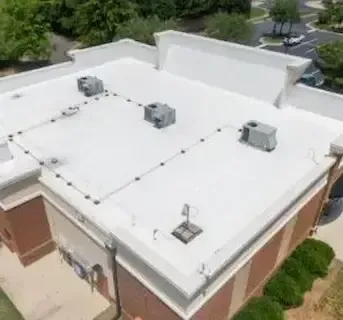
Full commercial roof replacement on Woodbury office buildings, HOA community structures, and retail properties with Washington County permit coordination included.
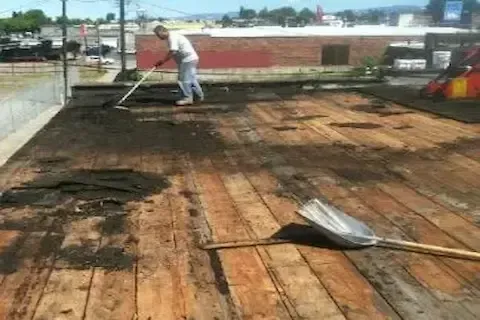
Commercial flat roof installation built for Minnesota's climate — TPO and EPDM systems on Woodbury office parks, retail buildings, and HOA community structures.
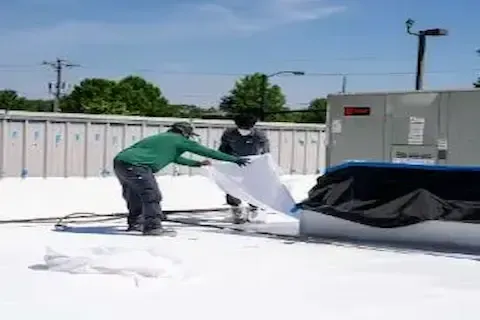
Commercial roof repair for Woodbury buildings — seam failures, flashing separations, membrane punctures, and emergency leak response throughout Washington County.
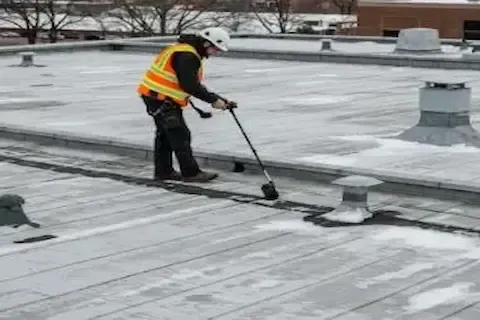
Commercial roof inspection with written reports and action timelines — serving Woodbury office buildings, HOA structures, and Washington County commercial properties.
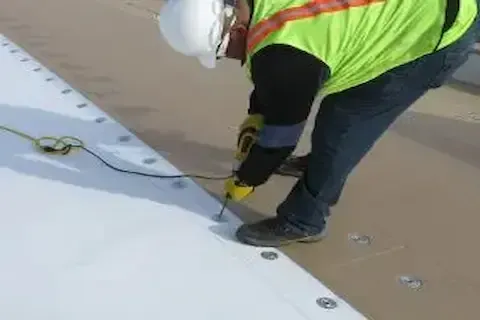
TPO roofing system installation for Woodbury commercial buildings — heat-welded seams, Minnesota climate performance, and 60-mil to 80-mil membrane options for office and HOA properties.
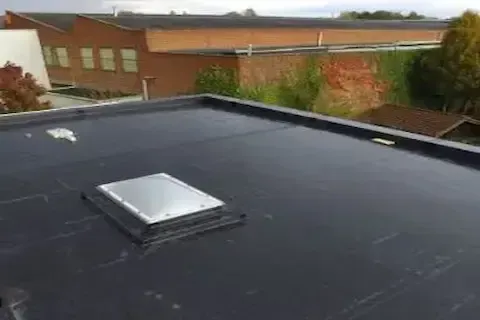
EPDM rubber membrane roofing for Woodbury commercial properties — cold-weather flexibility, proven Minnesota performance, and HOA community building expertise throughout Washington County.
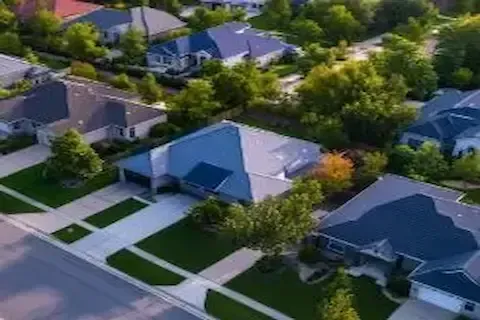
HOA and planned community roofing programs for Woodbury — board coordination, phased scheduling, and reserve fund documentation for Washington County's densest planned community market.
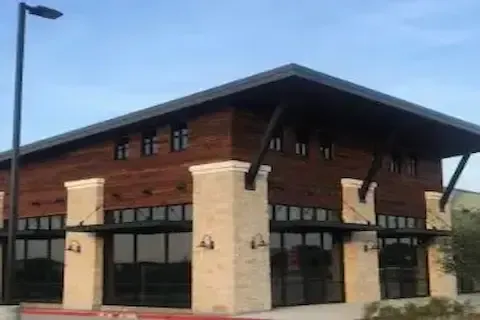
Office park and retail corridor roofing in Woodbury — City Centre Drive, Radio Drive, and Bailey Road commercial buildings served with flat roof replacement, repair, and inspection programs.

Commercial roof maintenance programs for Woodbury property owners and managers — biannual inspection, minor repair, drain clearing, and warranty compliance documentation for Washington County buildings.
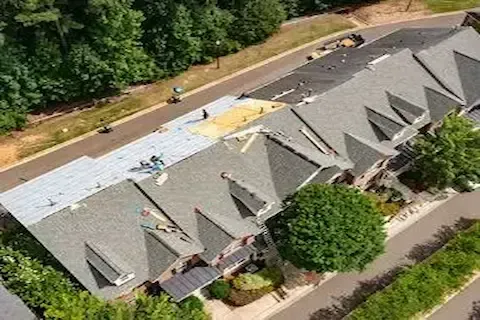
Multi-family roofing for Woodbury apartment complexes, condominiums, and townhome developments — coordinated through property management companies and HOA boards throughout Washington County.
Frequently Asked Questions
Commercial Roofing can be complex, and we’re here to provide answers to common questions. Here are some frequently asked questions from our clients.
Frequently Asked Questions about Commercial Roofing Contractor Woodbury MN
What types of commercial roofing systems do you install in Woodbury?
We install TPO, EPDM, modified bitumen, and built-up roofing systems on commercial properties throughout Woodbury and Washington County. System selection depends on your building type, roof slope, and long-term maintenance goals.
How do I know if my commercial roof needs replacement or just repair?
A thorough inspection identifies the difference. Roofs with isolated membrane failures, minor seam separations, or localized damage typically qualify for repair. When ponding water, widespread membrane deterioration, or structural deck issues are present, replacement is the more cost-effective long-term decision.
What permits are required for commercial roofing in Woodbury MN?
Washington County and the City of Woodbury require building permits for commercial roof replacement and significant repair work. We handle permit applications and coordinate inspections as part of every project — commercial property owners should never have to navigate that process alone.
How often should a commercial roof in Minnesota be inspected?
Twice per year — spring after freeze-thaw cycles run their course, and fall before winter loading begins. Woodbury's climate produces temperature swings that stress membrane seams and flashings more aggressively than most markets.
Do you work with HOA boards and property management companies?
Yes. HOA roofing programs require a different coordination process than individual commercial projects. We work directly with HOA boards and property management companies serving Woodbury's planned communities to manage multi-building assessments and phased replacement programs.
What makes a commercial roofing contractor qualified for Washington County projects?
Minnesota requires roofing contractors to hold a valid state license and carry appropriate liability and workers compensation coverage. Washington County commercial projects require permit compliance under the State Building Code. We are fully licensed, insured, and experienced with the specific permit process Woodbury and Washington County require.
Need Commercial Roofing?
What Our Satisfied Clients Have to Say About Woodbury Commercial Roofing
We pride ourselves on delivering great results and experiences for each client. Hear directly from home and business owners who’ve trusted us with their Commercial Roofing needs.

They managed the permit process, the HOA board communication, and the actual roofing work across three buildings in our Woodbury community. Every phase ran on schedule and the flat roof systems they installed have performed through two Minnesota winters without a single issue.
James Kowalski
Our office building on Radio Drive needed a full TPO replacement. They gave us a clear inspection report, walked us through the Washington County permit timeline, and completed the project without disrupting our tenants. Professional from start to finish.
Sandra Paulsen
We manage several commercial properties in Woodbury and these are the only commercial roofers we call. Their biannual inspection program has kept our roofs in warranty compliance and caught two seam repairs before they became interior water events. That is exactly what a maintenance program is supposed to do.
Robert Tanaka
The Trusted Commercial Roofing Expert Near You
Ready to hear more about expert services at Woodbury Commercial Roofing?
Contact us today to receive a detailed, no-obligation quote.

Woodbury & the Twin Cities metro
Monday-Friday: 9am-5pm, Saturday: 11am-3pm
