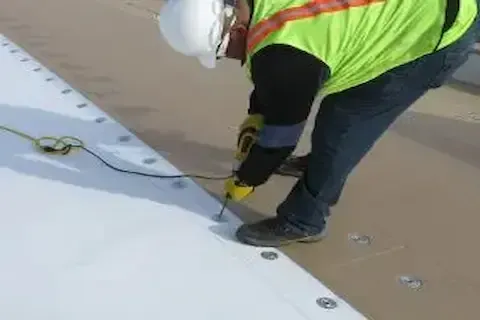
Winter TPO Roof Repair Calls in Woodbury Minnesota
Woodbury winters don't ease into cold — they arrive hard. By late November, flat commercial rooftops across the city are already contending with freeze-thaw cycling, wind-driven ice, and overnight temperatures that stress every seam and fastener on a TPO membrane. For building owners and facility managers, that means the phone calls start. Winter TPO roof repair requests follow a predictable pattern here, and understanding what drives them helps you act faster, spend less, and avoid the kind of deferred damage that turns a minor repair into a full membrane replacement.
Why Woodbury's Winter Conditions Are Hard on TPO Membranes
TPO — thermoplastic polyolefin — is one of the most widely installed single-ply roofing materials on commercial flat roofs in the Twin Cities metro. It performs well across a broad temperature range, but that doesn't mean it's immune to cold-weather stress. The membrane is designed to remain flexible in low temperatures, but repeated freeze-thaw cycles test that flexibility at every weld point, every penetration, and every perimeter edge.
In Woodbury specifically, geography adds a layer of risk. The city's position east of the metro means it can catch moisture-laden systems pushing in from Wisconsin before they fully break up. Those systems bring wet snow and ice accumulation that sits on low-slope roofs far longer than building owners expect. Add to that the radiant heat loss from occupied commercial buildings below, which creates melt-refreeze zones along parapet walls and roof drains, and you have a consistent set of conditions that produce the same failure patterns every season.
The Most Common Winter TPO Repair Calls
Across commercial properties in Woodbury — office parks along Hudson Road, retail strips near Woodbury Drive, and industrial buildings closer to the I-94 corridor — winter repair calls tend to cluster around three specific failure types.
Seam splits and weld failures are the most frequent. TPO seams are heat-welded during installation. Over time, and especially under the mechanical stress of thermal expansion and contraction, those welds can lose adhesion at the edges. Cold temperatures make the membrane stiffer, and when wind loading or foot traffic introduces stress at a compromised weld, the seam opens. Water follows immediately.
Flashing failures at HVAC curbs come in a close second. Commercial flat roofs in Woodbury carry a significant mechanical load — rooftop HVAC units, exhaust fans, and equipment curbs all require flashing details that terminate at vertical surfaces. Those transitions are vulnerable because the membrane must change plane, and caulking or lap adhesive that was marginal in summer often lets go once temperatures drop below freezing and the substrate contracts.
Ice-related punctures and membrane stress round out the pattern. Ice damming on flat roofs doesn't look like what you see on residential shingles, but it creates similar problems. Water that can't drain freely pools, freezes, expands, and lifts membrane edges. In some cases, especially where gravel or debris is present on the roof surface, freeze-thaw cycling can abrade the membrane from below. Punctures from equipment maintenance performed during cold weather are also more common in winter because a stiff membrane cracks rather than flexes under careless foot pressure.
What Happens When Repairs Are Delayed
The urgency of winter TPO repairs isn't always obvious from inside the building. A small seam split or a failed flashing boot may not produce visible ceiling staining for days or weeks, depending on the roof system configuration and the presence of insulation layers below the membrane. By the time water is visible inside, it has often traveled laterally through the insulation and across the deck, saturating material well beyond the entry point.
Wet insulation under a TPO membrane is a serious problem. It dramatically reduces thermal performance, adds weight to the deck, and creates the conditions for mold growth and deck deterioration. Replacing saturated insulation adds significant cost to what could have been a simple membrane repair. That's why early detection — ideally through scheduled inspections before winter arrives — is far more cost-effective than reactive response after damage is visible. Woodbury TPO roofing systems are designed with these regional conditions in mind, and understanding the full system helps you make better maintenance decisions throughout the year.
What Winter Repairs Actually Involve
Legitimate winter TPO repairs require more preparation than warm-weather work. Membrane temperatures matter — most TPO welding equipment has minimum substrate temperature thresholds, and reputable contractors use contact thermometers and temporary heat sources to bring the membrane into the correct range before attempting any weld. Skipping this step produces welds that appear sound but fail within weeks.
Surface contamination is also more of a factor in winter. Frost, condensation, and road salt tracked onto rooftops during service calls must be removed before membrane work can proceed. Any repair that doesn't account for these conditions is a temporary fix at best.
For seam repairs, the standard approach involves cleaning the existing weld zone, applying TPO primer to the affected surfaces, and then heat-welding a new cover strip over the compromised seam. Flashing repairs at HVAC curbs typically require stripping back the existing termination, addressing any substrate damage, and re-flashing with compatible TPO flashing membrane. Puncture repairs use a patch and weld method that, when done correctly, is essentially invisible once the roof is inspected later.
How to Reduce Winter Repair Volume
The most effective strategy for Woodbury commercial property owners is a formal fall inspection before freeze-up. A thorough inspection in September or October catches the seam and flashing conditions that are about to fail under winter stress. Repairing them in mild temperatures is faster, less expensive, and produces better-quality work than emergency repairs in January at minus ten degrees.
Roof drain maintenance is equally important. Clogged or slow-draining interior roof drains create standing water that accelerates all of the failure modes described above. Clearing drains and checking drain bowl integrity before winter is a low-cost step with meaningful impact on winter performance. If your building is served by TPO Roofing Systems that were installed more than five to seven years ago, having a contractor probe the seams and flashings annually becomes increasingly important as the system ages.
Working With a Contractor Who Knows the Local Conditions
Not every commercial roofing contractor has experience with Minnesota winters. Woodbury's climate demands a contractor who understands cold-weather welding protocols, has equipment capable of working in low temperatures, and can accurately assess whether a repair will hold through the remainder of the season or requires a more substantial intervention. When reviewing bids for winter repairs, ask specifically about substrate temperature requirements, primer use, and probe testing procedures after welding. Those details separate contractors who understand TPO system performance from those who are guessing.
