What Is TPO Roofing Worth on Woodbury Office Parks
TPO roofing is worth investing in for Woodbury office parks because it delivers measurable returns through energy cost reduction, extended service life, and deferred replacement spending. A properly installed TPO membrane on a Minnesota commercial roof typically lasts 20 to 30 years when maintained. Over that span, reflective surface properties reduce cooling loads, manufacturer warranties protect against premature failure, and the low-maintenance profile keeps annual operating costs predictable. For office park owners in Woodbury who need to justify capital expenditures to stakeholders, TPO performs well across all three financial categories that matter most.
What Makes TPO Roofing a Strong Value Proposition for Office Parks?
TPO membranes earn their value through three compounding advantages. First, the white reflective surface deflects solar heat, which reduces HVAC demand during Minnesota summers. Second, factory-welded seams create a watertight bond that outperforms adhesive-based systems over time. Third, TPO is lighter than built-up or modified bitumen alternatives, reducing structural load requirements. For a multi-building Woodbury office park, these properties translate into lower utility bills, fewer emergency repair calls, and reduced wear on mechanical systems. When you factor in that commercial energy rates in Washington County have risen steadily, even a modest percentage reduction in cooling load compounds into meaningful savings across a 20-year ownership horizon.
How Much Can Office Parks in Woodbury Actually Save on Energy?
Energy savings from TPO vary by roof size, insulation thickness, and building orientation, but reflective roofing studies consistently show cooling cost reductions in the range of 10 to 30 percent during peak summer months. For a 50,000-square-foot Woodbury office park, even a 15 percent reduction in summer cooling costs represents thousands of dollars annually. Woodbury experiences genuine summer heat pressure, particularly on large flat-roof commercial structures with western exposures along corridors like Radio Drive and Valley Creek Road where office parks are concentrated. Over a 20-year period, compounded energy savings often exceed the initial premium difference between TPO and lower-cost membrane options.
What Does Warranty Coverage Actually Protect Against?
Manufacturer warranties on commercial TPO systems typically run 15 to 30 years depending on membrane thickness and installation method. A 60-mil mechanically fastened system will carry a different warranty than an 80-mil fully adhered system. What matters for Woodbury office park owners is understanding what the warranty covers: most protect against material defects and seam failures, and some include labor costs for repairs within a defined window. Warranties do not cover damage from ponding water caused by inadequate slope or drain maintenance, so pairing your TPO installation with a proper drainage plan is essential. Woodbury TPO roofing systems that are installed to manufacturer specifications typically qualify for the highest warranty tier available, which directly affects resale value and insurance positioning.
How Does TPO Compare to Other Commercial Roofing Options on Cost Per Year?
When you evaluate roofing value on a cost-per-year basis rather than upfront installation price, TPO consistently outperforms older membrane technologies for flat commercial roofs. EPDM systems cost less to install but carry lower reflectivity, which increases cooling costs. Modified bitumen systems require more frequent maintenance and are more vulnerable to membrane splits under Minnesota freeze-thaw cycling. Built-up roofing offers durability but adds significant weight and requires longer installation windows. TPO sits at the intersection of low annual maintenance cost, high energy performance, and strong warranty coverage, making the lifetime cost per square foot competitive even against initially cheaper alternatives. For office parks that change hands or refinance during the ownership period, a newer TPO system with remaining warranty transfers value to the next owner.
What Installation Factors Affect Long-Term Value in Minnesota's Climate?
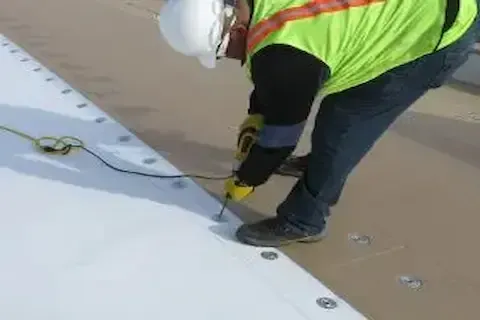
Minnesota's climate introduces specific performance variables that affect TPO value calculations. Freeze-thaw cycles stress membrane edges and penetration flashings repeatedly each season. Wind uplift requirements in Washington County demand that mechanically fastened systems meet specific fastener spacing to avoid membrane billowing. Thermal expansion and contraction across Woodbury's temperature range from negative 20 to positive 95 degrees Fahrenheit puts stress on seams over time. These factors make installation quality the single largest variable in whether your TPO system achieves its theoretical service life. A membrane installed with inadequate fastener spacing or improperly heat-welded seams will fail years before a properly installed equivalent. Selecting a contractor familiar with Minnesota commercial roofing conditions is not optional if you want the financial projections to hold. TPO Roofing Systems installed by experienced local crews account for these regional demands in their specification and fastener layout.
Is TPO Worth It for Smaller Woodbury Office Buildings?
Smaller office buildings on Woodbury's business parks, including the professional office clusters near Tamarack Road and the I-494 corridor, face the same climate exposure as larger structures but with less surface area to spread installation costs. For buildings under 10,000 square feet, the per-square-foot installation cost rises because mobilization and fixed overhead represent a larger share of total project cost. However, the energy and maintenance savings remain proportional to square footage, and the warranty protection is identical regardless of building size. For smaller buildings, the primary value argument shifts from large-scale energy savings to replacement avoidance: a properly maintained TPO system that lasts 25 years instead of a degraded membrane replaced at 12 years saves a full installation cycle, which at current material and labor costs represents a substantial avoided expense.
What Should Office Park Owners Ask Before Approving a TPO Specification?
Before approving a TPO roofing specification, Woodbury office park owners and property managers should confirm the membrane thickness specified, verify that the fastener pattern meets local wind uplift requirements, understand which warranty tier the installation qualifies for, and confirm that drain placement and slope adequacy have been evaluated. Asking for a thermal scan or moisture survey on existing insulation layers before re-roofing avoids trapping wet insulation under a new membrane, which reduces the system's energy performance and creates long-term problems. A clear maintenance schedule, typically an annual inspection with seam and flashing checks, is also worth establishing at installation so the warranty conditions remain intact throughout the coverage period.
