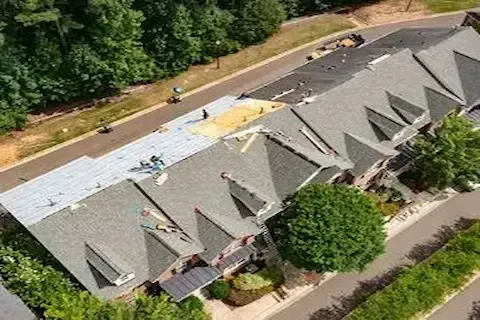
Townhome Roof Replacement Sequencing in Woodbury MN
Townhome roof replacement sequencing means dividing a multi-building complex into phases so crews complete one section at a time before moving to the next. In Woodbury, MN, where attached townhome rows share rooflines, driveways, and parking fields, uncoordinated tear-off creates access chaos for residents. A properly sequenced project keeps at least one parking lane open per building cluster, maintains trash and mail route access daily, and limits exposed decking to what crews can reshingle in a single day. Most Woodbury associations complete phased replacements across two to five consecutive weeks depending on building count.
How Do You Determine the Starting Phase for a Townhome Complex?
Start by mapping the site. Walk the full property and identify which building clusters share a driveway lane, which rows back up to drainage swales or fence lines, and where the dumpster staging area can sit without blocking resident vehicles. In Woodbury townhome developments like those along Settlers Ridge Parkway or near Radio Drive, parking fields are typically arranged in long perpendicular rows. The sequence almost always begins at the building farthest from the site entrance so that material deliveries and dumpster hauls travel an open lane on each pass. Starting at the back eliminates the problem of blocking your own exit as the project moves forward.
How Many Buildings Should Be Active at One Time?
Limit active tear-off to what your crew can fully reshingle before nightfall. In standard Woodbury townhome complexes, that means working two to three attached buildings simultaneously if each building carries six to ten roofline squares. Running four or more buildings at once stretches tear-off across multiple days, leaving exposed decking overnight — a liability issue and an insurance concern most Woodbury HOA boards will reject immediately. Your Multi-Family Roofing contractor should provide a written daily completion guarantee that specifies no decking stays open past sunset, regardless of weather delays.
How Do You Maintain Parking and Driveway Access During Each Phase?
Assign a minimum parking count per active phase before the project begins. Most Woodbury HOA management agreements require at least one guaranteed space per unit for the duration of construction. Sequencing solves this automatically when planned correctly: while crews work Phase 1 buildings, Phase 2 and Phase 3 parking remains fully open. Post laminated phase maps at each building entry and distribute a simple one-page schedule to residents seven days before work begins. Washington County emergency vehicle clearance requirements also apply — keep one through-lane open at all times, minimum twelve feet wide, connecting the site entrance to each active building cluster.
How Do Material Deliveries and Dumpster Staging Work Across Phases?
Pre-stage shingle pallets at the beginning of each phase rather than storing a full project supply in one location. For a Woodbury complex with four building clusters, deliver Phase 1 and Phase 2 materials on day one, stored at opposite ends of the lot. Phase 3 and Phase 4 materials arrive mid-project once cleared staging space opens up. Dumpster placement follows the same logic — one dumpster per active cluster, pulled and replaced within twenty-four hours of filling. Coordinate with the City of Woodbury right-of-way office if any dumpsters must temporarily stage on a public street adjacent to the development. Permits for this are straightforward but require two to three business days lead time.
How Do You Handle HOA Communication Throughout the Sequence?
Woodbury HOA boards and their management companies typically require written phase schedules submitted before project kickoff, plus daily status updates during active work. Set up a simple email or text chain that includes the board president, property manager, and at least one resident contact per building cluster. Send a brief end-of-day message confirming which buildings were completed, which start tomorrow, and whether the schedule is on track. This takes five minutes per day and eliminates the overwhelming volume of resident phone calls that derail sequencing decisions mid-project. For larger complexes in areas like Woodbury's Summerhill or Settlers Pond neighborhoods, some contractors assign a dedicated site foreman whose sole job is resident communication and sequence coordination.
How Do You Adjust Sequencing When Weather Interrupts the Schedule?
Build a one-day weather buffer into every phase transition. If Phase 1 is scheduled to complete on Wednesday and Phase 2 begins Thursday, treat Wednesday as a soft deadline with Thursday as the hard start for Phase 2 staging. When a full rain day hits mid-phase, do not advance material staging or begin tear-off on the next cluster. Resume exactly where you stopped, complete that cluster to full installation, then move forward. Never split a phase across a weather break — partial tear-off on a building that sits overnight exposed is the single most common sequencing failure on Woodbury townhome projects. Check with your contractor about their specific rain-day protocol before signing the project agreement. For background on how phasing fits into the full scope of planning, review Woodbury multi-family roof projects for broader project context.
How Is the Final Phase Closed Out and the Site Restored?
Final phase close-out includes magnetic nail sweeps across every parking surface and driveway lane — run the sweep twice, once immediately after the last shingle crew clears and again the following morning. Remove all dumpsters within forty-eight hours of project completion. Restore any landscaping or mulch beds disturbed by material staging. Submit warranty documentation to the HOA within five business days: manufacturer material warranty, contractor workmanship warranty, and any applicable insurance supplement paperwork. In Woodbury, most HOA boards require a written punch-list sign-off before releasing final payment, so walk the full property with the board representative and document any remaining items in writing before that meeting.
