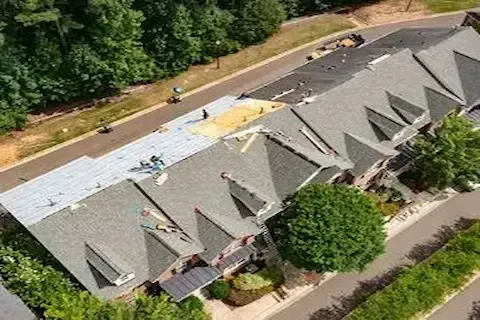
Multi-Family Roofing in Woodbury MN Townhomes and Condos
Replacing or repairing a roof on a single-family home is a contained project. When the same work scales up to cover a Woodbury townhome complex or condominium association, every variable multiplies. You are coordinating across dozens of units, managing HOA governance, working around tenant schedules, and sequencing crews across connected buildings that share walls, drainage systems, and common rooflines. Multi-family roofing in Woodbury MN demands a level of planning and communication that most residential roofing projects never require.
What Makes Multi-Family Roofing Different From Residential Work
The core difference between a single-home re-roof and a multi-family project is not scale alone — it is the number of stakeholders involved at every stage. On a standard residential job, you work with one homeowner and make decisions in real time. On a townhome or condo roof replacement in Woodbury, you are typically coordinating with an HOA board, a property management company, individual unit owners or tenants, and sometimes a community association attorney reviewing contractor insurance and warranty terms before a contract is ever signed.
Woodbury's planned communities — many of them developed rapidly during the 2000s housing boom — now contain thousands of aging attached units where the original roofing materials are approaching the end of their service lives simultaneously. That compression means large sections of a development may need full replacement within the same two-to-three-year window, which creates both urgency and opportunity for associations to plan strategically.
Beyond stakeholder management, multi-family structures introduce physical complexity. Shared rooflines, continuous ridge runs across multiple units, staggered roof planes, and common-area overhangs all require more precise flashing work and more careful material staging than a detached home. Valleys that drain from one building section into another need to be managed as a system, not as separate components.
HOA Governance and Project Approval Timelines
In most Woodbury condominium and townhome associations, the roof is a common element — meaning the HOA is responsible for its maintenance and replacement, not individual unit owners. This creates a formal approval process that affects every project timeline. Before a contractor can begin work, the association typically needs to present bids at a board meeting, hold a vote, notify the full membership, and in some cases wait for a reserve fund draw approval or special assessment authorization.
This process can take anywhere from thirty days to six months depending on how the association's governing documents are structured and whether the reserve study already anticipated the expense. Working with a roofing contractor experienced in Multi-Family Roofing means understanding these timelines from the outset and building them into the project schedule rather than treating them as obstacles.
Some Woodbury HOAs phase large roofing projects across multiple fiscal years to manage cash flow and avoid special assessments. This requires a contractor who can commit to material pricing and scope across extended timelines, and who can document work completed on individual buildings so that the association's records remain clear for future buyers and lenders reviewing the community's maintenance history.
Building Sequencing Across a Complex
When a multi-unit complex in Woodbury involves ten, fifteen, or twenty separate buildings, the order in which those buildings are addressed matters. A well-planned sequencing strategy accounts for several factors simultaneously.
First, buildings with the most urgent damage or the greatest risk of interior water intrusion should be prioritized regardless of where they fall geographically within the complex. If a building at the back of the community has active leaks threatening unit interiors or electrical systems, it moves to the front of the queue.
Second, dumpster placement and material delivery staging should drive geographic sequencing where possible. Rolling through a community in a logical path — rather than jumping from one end to the other — reduces the number of times heavy materials and equipment disrupt parking areas and pedestrian access across the entire property.
Third, tenant notification windows need to align with the construction schedule. Most Woodbury property managers and HOA boards require a minimum notice period before work begins on or adjacent to occupied units. Coordinating that notification with the actual construction sequence prevents residents from receiving advance notice for work that then gets delayed by weather or material backorders.
Material Choices for Woodbury's Climate and Community Standards
Minnesota's climate is punishing on roofing materials. Woodbury experiences temperature swings that can exceed one hundred degrees Fahrenheit between mid-winter lows and midsummer highs, combined with freeze-thaw cycles in spring and fall that stress shingle adhesion and flashing seals. For multi-family structures, this climate reality intersects with HOA aesthetic standards that often specify consistent material appearance across all buildings in a community.
Architectural asphalt shingles remain the most common choice for Woodbury townhome and condo complexes because they balance cost, durability, and visual consistency. When selecting a shingle for a large multi-family project, the specific product line and color must be agreed upon early — both to ensure adequate material availability and to lock in the aesthetic standard the association wants to maintain as individual buildings are replaced over time.
Impact-resistant shingles have become increasingly relevant for Woodbury multi-family projects as hail events have grown more frequent across the eastern Twin Cities metro. Many insurance carriers now offer premium discounts for Class 4 impact-rated products, which can meaningfully offset their higher upfront cost when calculated across a large installation. HOA boards reviewing bid packages should ask contractors to present both standard and impact-resistant options with associated insurance implications.
Proper ice and water shield installation is non-negotiable on multi-family roofs in this region. Woodbury's winters regularly produce the conditions that cause ice dams — extended cold followed by above-freezing days — and the consequences of an ice dam on an attached building extend beyond one unit into shared walls and common ceilings. Generous ice barrier application at eaves and in all valleys is a standard expectation on well-specified projects.
Tenant Communication and Disruption Management
Roofing work is loud, disruptive, and visually chaotic. On a single-family home, the owner accepts that disruption for two or three days. On a multi-family complex, the same disruption affects residents who had no direct say in the decision to hire a contractor and who may be working from home, managing young children, or caring for elderly family members in units directly below active tear-off work.
Responsible multi-family roofing contractors working in Woodbury communities establish clear communication protocols before work begins. This includes providing written notice to affected units — typically forty-eight to seventy-two hours in advance — detailing the specific dates when noise and debris disturbance should be expected at each building. It also includes clear instructions on parking restrictions so that residents do not return to find their vehicles blocked or inaccessible.
Dust and debris control matters more on attached structures than on detached homes. Torn-off shingle materials falling from a continuous roofline can land in private patios and balconies, clog shared drainage systems, or create slip hazards in common walkways. Daily cleanup is not optional on a well-managed Woodbury multi-family project — it is a contractual expectation that associations should include explicitly in their bid scope.
Insurance, Warranties, and Documentation for HOA Projects
Multi-family roofing projects in Woodbury generate documentation requirements that extend well beyond a residential certificate of completion. HOA boards and their management companies typically need copies of the contractor's general liability certificate, workers' compensation documentation, and evidence of the manufacturer's warranty registration for materials installed on each building. Some lenders reviewing condo sales in a community will request this documentation as part of the mortgage approval process, so maintaining organized records matters for years after the project concludes.
Manufacturer warranties on multi-family projects may differ from residential warranty terms. Some shingle manufacturers classify multi-family structures differently and require specific installation certifications from the contractor to validate the warranty. Confirm warranty applicability before finalizing material selections — an uncertified installation on a twelve-unit building could leave the association without a valid warranty claim if problems emerge.
Good recordkeeping also matters for insurance claims. Woodbury communities that sustain hail or wind damage across multiple buildings need clear documentation of pre-storm roof condition to support an insurance carrier's assessment of storm-related damage versus pre-existing wear. Contractors who perform multi-family work should provide detailed condition reports and photographs at the project start, creating a baseline record the association can reference if a future claim requires it. Pairing this with ongoing attention to flat roof drain maintenance across any low-slope common areas ensures the full roofing system remains in documented, defensible condition.
Planning a Multi-Family Roofing Project in Woodbury
The most effective multi-family roofing projects in Woodbury begin twelve to eighteen months before the anticipated construction start. That lead time allows the HOA board to gather comparative bids, complete the internal approval process, secure financing or confirm reserve fund availability, and select a contractor with enough runway to properly schedule materials and crews.
Woodbury's growth as a planned community hub — with large developments spread across the city's eastern and northern quadrants — means that roofing contractors active in the area develop genuine familiarity with the specific community types, HOA structures, and material standards common to local projects. That local knowledge translates into fewer surprises during project execution.
If your association is beginning the planning process, start by requesting a full-property condition assessment that covers all buildings simultaneously. This gives the board a unified picture of urgency across the complex, helps prioritize phasing if the work cannot be completed in a single season, and creates a written baseline that supports future reserve study updates. Engaging a contractor with documented multi-family experience before you finalize bid requirements will also help you write a scope of work that captures the full complexity of the project rather than inviting bids that omit critical line items and appear artificially competitive.
