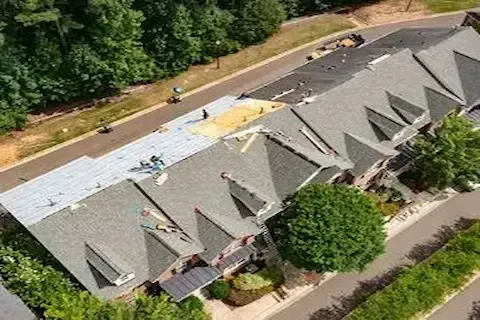
Summer Apartment Roof Replacement Schedules in Woodbury
Coordinating a roof replacement across a multi-unit apartment or townhome complex is a logistical challenge at any time of year, but Woodbury property managers and HOA boards consistently find that summer provides the most reliable window for large-scale work. Longer days, more predictable dry stretches, and reduced HVAC-related scheduling conflicts combine to make June through August the preferred season for multi-family reroof projects throughout Washington County. Understanding how contractors build and manage those schedules can help you plan better, communicate more effectively with tenants, and avoid the delays that push projects into fall.
Why Summer Timing Works for Multi-Family Complexes
Asphalt shingle and modified bitumen installations both require sustained dry conditions and temperatures above 40°F for proper adhesion and sealing. Woodbury summers typically deliver exactly that — with average daily highs in the mid-80s and relatively low humidity compared to coastal markets. This consistency allows roofing crews to work longer hours without weather interruptions, which matters enormously when you're replacing 20 or 30 rooftops across a complex rather than a single residential home.
Beyond the weather, summer timing aligns with tenant behavior in useful ways. School-age families often travel or adjust their home schedules during June and July, which reduces the volume of noise complaints and scheduling friction that can slow a project. Building managers along Bailey Road and throughout the neighborhoods south of Tamarack Road have noted that summer tenant coordination tends to go more smoothly than fall projects, when school schedules and cold-weather concerns increase sensitivity to disruption.
How Phased Scheduling Protects Residents
Large complexes are almost never reroofed in a single continuous push. Instead, contractors divide the work into phases by building cluster, row, or unit grouping. A typical Woodbury townhome development might be divided into four to six phases, with each phase covering six to ten units at a time. This approach limits the number of residents affected on any given day, ensures that crews can fully complete and inspect each section before moving on, and gives property management a logical checkpoint structure for quality control.
Phased scheduling also creates a buffer for weather delays. If an afternoon thunderstorm rolls through the St. Croix Valley and forces an early stop on a Tuesday, the crew can resume the same phase Wednesday without losing progress on the whole complex. Single-phase approaches leave almost no margin for that kind of interruption, and in a Woodbury summer, afternoon storms are a real variable.
When reviewing your contractor's proposed schedule, ask specifically how phases are defined, what triggers a phase sign-off, and how material staging will be handled between phases. These details determine whether a 10-day project stays at 10 days or quietly becomes three weeks.
Tenant Communication and Notice Requirements
Minnesota's landlord-tenant statutes require reasonable notice before contractors access areas adjacent to or above occupied units. For large reroof projects on Woodbury apartment complexes, 48 to 72 hours written notice is standard practice before crews begin work on any specific building cluster. Some HOA-governed townhome communities on the east side of Woodbury near Ojibway Park have incorporated roofing schedule notices into their standard project communication plans, which reduces resident pushback and sets clearer expectations.
Practical communication steps for property managers include posting written notices on unit doors, sending email or app-based alerts if your complex uses a resident platform, and providing a direct contact number for roofing-related questions. Residents will want to know how long the noise will last, whether they need to move vehicles, and whether attic access will be needed. Having those answers ready before the first crew truck arrives prevents the kind of friction that generates formal complaints.
For Multi-Family Roofing projects specifically, the material delivery logistics are worth flagging in advance. Bundle drops onto existing roofs create significant noise and vibration. Giving residents a one-hour heads-up on material delivery days is a small step that significantly reduces the volume of calls to your management office.
Material Choices That Affect Summer Scheduling
Not all roofing materials perform the same way in summer heat, and your material selection affects both the installation timeline and long-term performance. Standard three-tab shingles install quickly but offer less impact resistance than architectural shingles — a consideration in Woodbury, where hail events are common enough to influence insurance premiums. Architectural shingles require slightly more careful installation in peak heat, since overworked crews on hot days tend to rush nailing patterns, but they typically provide better warranty coverage for multi-family policies.
Modified bitumen flat roofing systems, which appear on many Woodbury apartment buildings with low-slope sections above garages or entry canopies, are best installed in moderate temperatures. Early morning starts in July and August allow crews to complete torch-down or cold-process applications before the afternoon heat peaks, maintaining proper adhesion. If your complex includes a mix of pitched and flat roof sections, your contractor should sequence those phases to account for temperature windows.
Coordinating With Insurance and HOA Timelines
Many Woodbury multi-family roof replacements follow a hail or wind event that triggers an insurance claim. That adds a documentation and approval layer to the scheduling process. Getting your adjuster inspection completed and your scope-of-loss letter in hand before contractor bids go out is critical — it prevents expensive scope changes mid-project if the insurer and contractor disagree on what qualifies for replacement coverage.
HOA boards overseeing townhome communities in Woodbury often face an additional constraint: reserve fund approval timelines. Major capital expenditures typically require board votes and member notices that can take 30 to 60 days under most governing documents. Building that lead time into your summer planning — targeting a May decision to allow June or July construction — avoids the rush that pushes quality projects into September, when fall weather windows begin to tighten.
Reviewing case studies from Woodbury multi-family roof projects can give HOA boards and property managers a realistic picture of what phased summer schedules look like in practice across comparable Washington County properties.
Planning Your Project Start Date
The most reliable summer roof replacement projects in Woodbury are those that begin contractor outreach in March or April. High-quality commercial and multi-family roofing crews book out quickly once the season opens, and projects that wait until June to solicit bids often face a compressed schedule or reduced contractor options. Early engagement also gives you time to finalize material specifications, complete HOA approvals, and prepare tenant communication without scrambling.
If your complex already has a known replacement cycle — roofing systems on most Woodbury apartment developments installed in the late 2000s and early 2010s are approaching 15 to 20 years — building a summer schedule into your five-year capital plan rather than reacting to failure events gives you the best combination of cost control, quality outcomes, and tenant impact management.
