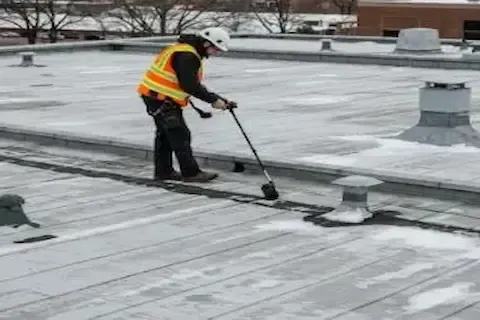
What Is Included in a Woodbury Commercial Roof Inspection
A commercial roof inspection in Woodbury, MN typically covers six core areas: membrane condition, flashings and penetrations, drainage and ponding water, interior ceiling indicators, insulation integrity, and a written report with photographic documentation. Inspectors walk the entire roof surface, check every penetration point, and document findings with photos. The goal is to identify active leaks, deterioration, and maintenance issues before they escalate into structural damage. Most full inspections take one to three hours depending on roof size and complexity. Property owners in Woodbury should schedule inspections at least twice per year, typically spring and fall, to stay ahead of Minnesota's seasonal extremes.
What Does a Membrane Inspection Include?
The membrane is the waterproof layer that protects everything beneath it. During a Commercial Roof Inspection, the inspector examines the entire membrane surface for blistering, cracking, shrinkage, punctures, and seam separation. On TPO and EPDM systems, common in Woodbury commercial buildings, seam integrity is a primary focus because seam failure is the leading cause of leaks. The inspector will probe soft spots that may indicate wet insulation underneath and look for UV degradation that has weakened the membrane over time. Any area where the membrane has lifted, split, or lost adhesion is flagged and photographed for the report.
How Are Flashings and Penetrations Evaluated?
Flashings seal the transitions between the membrane and vertical surfaces like parapet walls, HVAC curbs, skylights, and pipe boots. These are the highest-risk points on any flat or low-slope commercial roof. The inspector checks that all counterflashing is secure, that caulking and sealant have not cracked or pulled away, and that metal flashings have not corroded or lifted at the edges. Every penetration — drains, vents, exhaust stacks, conduit, and equipment curbs — is individually examined. In Woodbury's freeze-thaw climate, flashing failures are extremely common because ice expansion repeatedly stresses the seals each winter.
What Drainage Checks Are Performed?
Flat and low-slope commercial roofs depend entirely on functioning drainage to prevent ponding water, which accelerates membrane deterioration and adds dangerous structural load. The inspection includes checking every interior drain, scupper, and downspout for debris blockages, cracks, and proper seating. The inspector also evaluates whether the roof surface has adequate slope toward drains or whether low spots have developed over time due to structural deflection. After heavy rain or snowmelt events in Woodbury, ponding water that remains for more than 48 hours is documented as a deficiency. Gutters and downspout extensions are checked where applicable.
Does the Inspector Check Inside the Building?
A thorough commercial roof inspection includes an interior walkthrough to look for evidence of active or past leaks. Inspectors check ceiling tiles, insulation batts, structural decking, and interior walls near roof penetrations for water stains, mold, efflorescence, or soft spots. Interior evidence often reveals where water is actually entering, which may differ from where the membrane failure exists due to water migration through the roof assembly. This step is particularly important in older Woodbury commercial properties where previous repairs may have masked recurring issues without correcting the underlying failure point.
What Is Included in the Written Inspection Report?
The written report is what makes an inspection actionable. It should include a dated summary of all findings, photographs tied to specific roof zones, a prioritized list of repairs from immediate to preventive, and an estimated remaining service life for the existing roof system. For Woodbury commercial roof inspections, a well-structured report also notes weather conditions at the time of inspection, identifies any areas that could not be accessed safely, and flags any manufacturer warranty conditions that may be affected by the documented deficiencies. This documentation is also useful when negotiating commercial leases or property sales in the Woodbury market.
How Often Should Woodbury Commercial Properties Be Inspected?
Industry standards recommend a minimum of two inspections per year for commercial flat roofs. In Woodbury, the optimal schedule is once in late spring after freeze-thaw cycles have done their damage, and once in early fall before winter snow loads arrive. Additionally, inspections should follow any major storm event, hail event, or after rooftop mechanical work. If your roof is more than 15 years old or has had repeated repairs, quarterly monitoring may be appropriate. Skipping inspections is one of the most common ways Woodbury property managers allow minor membrane issues to become full replacement scenarios.
